
After the Storm: How We Restore Your Power
Published:
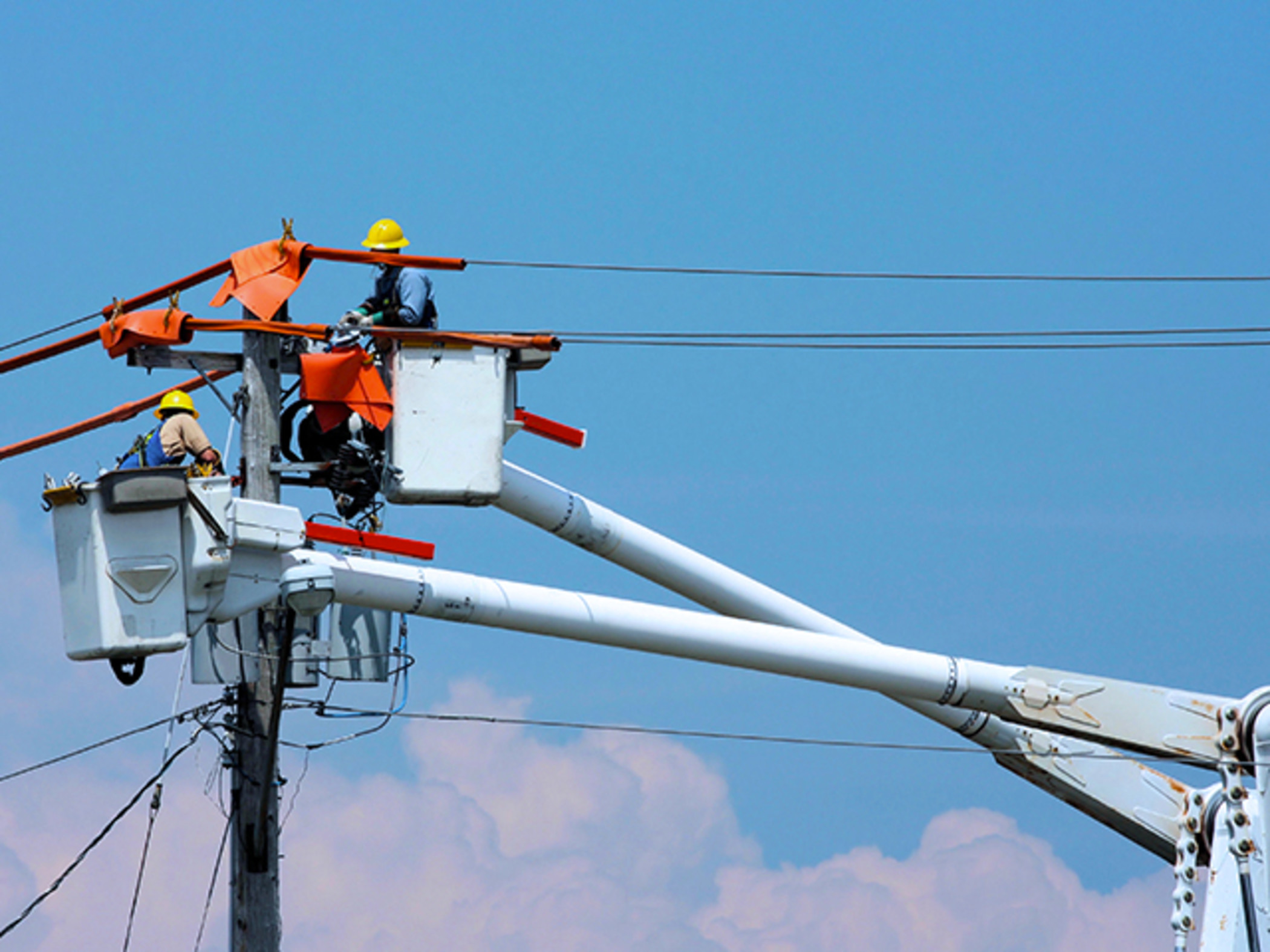
Storms, lightning strikes, ice and other extreme weather conditions are responsible for about 80% of major power outages, according to Climate Central. When the lights go out, your energy company works hard to restore power as quickly as possible. But how, exactly, do they do that?
First, power is restored to critical community services, like hospitals and fire departments. Next, the focus turns to bringing back power to the greatest number of customers in the shortest amount of time.
Steps to restoring power
A detailed plan establishes priorities, including communicating to repair crews and the public. In general, the following steps occur:
- If a storm is approaching, local repair crews are put on standby so they can respond to problems quickly. They may be sent to the areas where the greatest impact is expected.
- The first priority is to repair downed transmission lines, which supply power to one or more distribution substations serving tens of thousands of customers.
- Substations are repaired next. They contain equipment for switching and regulating voltage.
- Distribution lines carry power from substations and may serve hundreds of consumers. When the problem is corrected at this stage, all customers served by the distribution line will have power restored.
- Tap lines run from a main distribution line to transformers in neighborhoods or outside homes. These lines serve only a few customers and have lower priority. Even if these lines are fixed, customers will still be without power until the transmission or distribution lines are repaired.
- Individual service lines run from the transformer to your meter. If this line is damaged, it may explain why your neighbor has power and you don't. This type of damage has the lowest priority because the line serves just one customer.
Tips for customers
There are a variety of things you can do to minimize the impact of a power outage:
- Have a backup generator ready in case of an outage. Don't connect the generator directly to your electrical system unless the proper isolation equipment is installed by an electrician.
- If you see a downed line, stay away from it and call 911 or your energy company immediately.
- If a power line comes into contact with your vehicle, stay in the vehicle and keep others away. Never drive over downed power lines.
- Contact your energy company in case of an outage. Customer calls help in locating and evaluating the extent of the damage.
- Crews may be working in your area. Slow down and give lineworkers plenty of room when you see trucks or warning signs.